





September 03, 2026
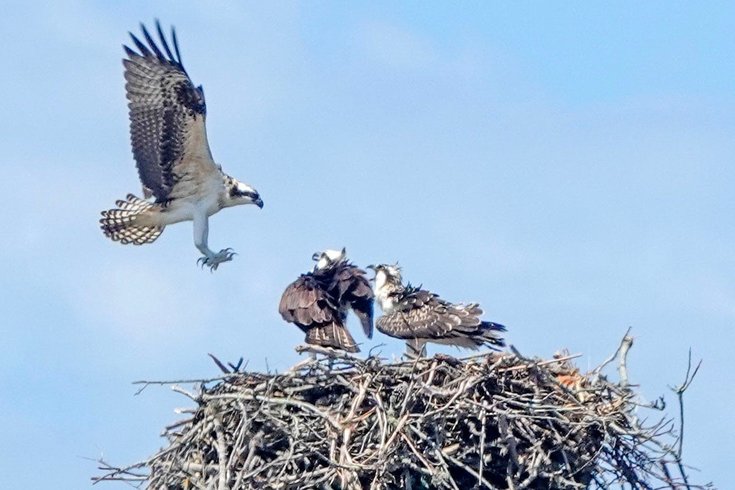 Ron Schloerb/USA TODAY NETWORK via Reuters Connect
Ospreys in New Jersey are struggling to reproduce and chicks are starving in their nests due to a shortage of their primary food source, menhaden fish.
Although ospreys were removed from New Jersey's list of endangered species in January 2025, the birds of prey are experiencing severe breeding issues, scientists say.
The 2025 mating season for the predatory bird, which takes place during the spring and summer months, was the worst in 30 years with 57% of nests failing to produce babies, according to the Conserve Wildlife Foundation of New Jersey. And so far, 2026 looks to be even worse, New Jersey Osprey Project lead Ben Wurst told NorthJersey.com.
"What we saw this year when we went out and did our early season surveys was simply a reduction in egg laying by females in the spring," Wurst told the outlet. "This is a sign of food stress."
Ospreys only lay as many eggs as is feasible based on the amount of food available, so when there's plenty of fish around, they can lay three or four at a time. But in tough times, they'll only lay one or two. The change seen this year and in 2025 is being attributed to the lack of menhaden fish, the primary prey of ospreys, as the population has thinned out in the nesting areas.
Ospreys return to New Jersey around late March and start building nests and courting in April. The eggs are laid later that month and hatch in late May. The babies start to leave the nest and learn how to fly in July before the species migrates down south for the winter starting in late August and early September.
Wurst said that when his team returned in July, in some nests, the males couldn't find enough food, thus forcing the females to hunt and leaving the eggs vulnerable to predators. He added that other nests were completely abandoned by adult birds who had moved on to areas with more prey.
"Many nests that we went back and checked, where they actually produced young, in many of them those young starved to death and we found remains of those young with them either in the nest dead or underneath the nest," Wurst said.
The problem isn't limited to New Jersey's shores, as the Chesapeake Bay has experienced similar food shortages. Virginia's Center for Conservation Biology found that the number of menhaden fish that ospreys bring back to their young has declined 80% in 40 years, Audubon reported.
"Osprey chicks are starving in their nests, and the reason is simple," center director Bryan Watts told the outlet. "Their primary food source is menhaden. And that food source is no longer abundant."
No numbers for 2026 have been released yet, but 2025 was a particularly tumultuous year for the birds in New Jersey. The Conserve Wildlife Foundation monitored 507 active nests and 288 of those didn't produce any babies. In total, only 352 offspring were born across the state. That means each active nest only produces 0.69 chicks — experts say that number should be at 0.8 young per nest for a healthy population.
Because ospreys are a top predator and primarily eat fish, experts say they're an indicator species that show the health of the ecosystem around them. Whether they can breed successfully shows how much fish is available for not only them, but also dolphins, seals, bluefish, whales and other birds.
"When ospreys struggle to find enough food to raise their young, it signals that the marine food web may no longer be functioning as it should," the foundation's website states.