




November 16, 2026
 Michael Karas/USA TODAY NETWORK via Imagn Images
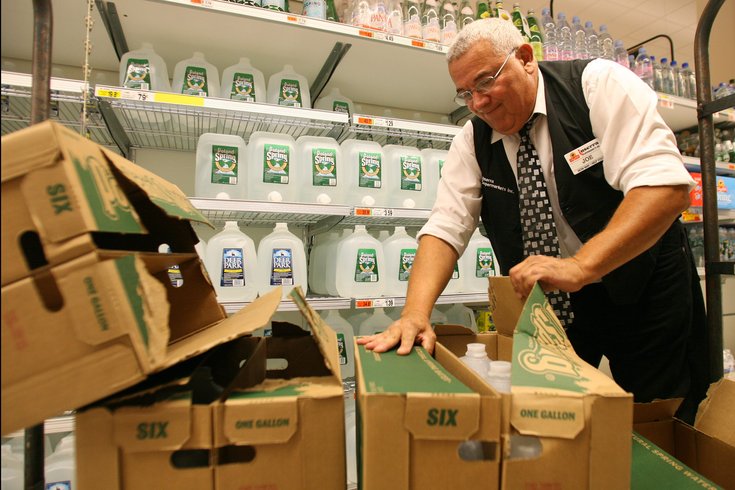
Technology issues have caused recent outages for Microsoft, the FAA and major U.S. banks, leading to some doomsday conspiracy theories. Government officials recommend having three days worth of emergency supplies. Above, a grocery store clerk in New Jersey restocks the shelves after a boil water advisory.
In the past month, dozens of countries around the world have urged their citizens to build a 72-hour survival kit, the Pentagon told U.S. military bases to prepare to be able to function for 90 days off the grid, a global Microsoft outage knocked millions off Outlook for a day and the FAA grounded all U.S. departing flights for several hours over a major telecommunications failure.
Then on Monday, customers of some of the biggest U.S. banks reported having difficulty accessing online accounts.
Meanwhile, "The Simpsons" predicted three years ago that there would be a massive blackout on Nov. 17 ... which of course is tomorrow. As you can imagine, conspiracy theories are swirling on the internet.
As for the long-running animated comedy, a 2023 episode titled "It's a Blunderful Life" forecasted a snowstorm-caused blackout a few days before Thanksgiving and referenced the date Nov. 17. Social media users have since pointed out that the Federal Emergency Management Agency and Federal Communications Commission plan to test for its emergency alert system tomorrow.
There's another 11/17 tie, too, with the Microsoft outage appearing to begin at 11:17 a.m.
Maybe "The Simpsons" were once again predicting real life. Just remember when that emergency alert interrupts all radio and TV broadcasts on Tuesday afternoon, that it is in fact just a test.
While searching for a connection in each of these individual events could boil down to fearmongering, being prepared for a potential national or global catastrophe is advised. Government officials recommend having an emergency kit in homes or cars with enough supplies to last three days in case of a natural disaster or other unexpected event. So what exactly should go inside a survival bag? Here's what officials have to say.
Everything should be contained in airtight plastic bags, and it can all be stored in one or two plastic bins in a basement, closet or other storage area, according to Ready.gov. It should be easily accessible and located in a cool, dry place to avoid spoiling anything inside. Officials recommend checking in once every six months or year to make sure it hasn't been damaged and to throw out any expired food.
Inside the bins, the U.S. State Department recommends a separate backpack or duffle bag for each family member, ideally one that's waterproof. Each bag can include medications, documents, clothing and more tailored to each person. Plus, putting it in a bag means it can be easily grabbed in the event of an evacuation.
An emergency kit should include a three-day supply of food that doesn't require refrigeration or cooking. That means shelf-stable canned goods like beans, veggies or meat, plus snacks like crackers and protein bars. The kit can also include candy and gum, and it should include infant formula if there's a baby in the household.
The rule for water is one gallon per person, per day. For a family of four, that means 12 gallons in total for a three-day kit. However, the State Department also recommends grabbing a three-day supply of water purification tablets, plus a water bottle or thermos to drink out of.
For people with pets, the kit should also include a few days worth of food and extra water for four-legged friends, plus any medications or other necessary items to keep them safe.
Keeping safe during an emergency doesn't just mean staying fed and hydrated. According to Ready.gov, every kit should have the following items to stay alert about the outside world, keep in communication with loved ones and make sure those canned goods can actually be opened.
• Flashlight
• Hand-crank or battery-powered radio, plus extra batteries
• Dust mask or respirator
• Manual can opener
• Wrench or pliers to shut off utilities
• Cellphone chargers or external battery
• Matches in a waterproof container
• Paper and pencil
• Duct tape
• Scissors
• Plastic sheeting (for use during shelter-in-place)
• Local map
• Emergency whistle
On top of the possibility of huddling around the living room and eating beans for a few days, a disaster also includes the possibility of injury. Thus, every survival bin should have a first aid kit and sanitation supplies, such as wet wipes, hand sanitizer and personal hygiene products. It should also have a few rolls of toilet paper — the cardboard tubes can be removed for easier storage.
Anyone on daily or weekly medications should have a few day supplies of those, as well. It might also be a good idea to include non-prescription medicines such as pain reliever, antacids and cold and flu remedies, if they're not already in the first aid kit.
Every kit needs to account for each individual person living in a home. To that end, it should have at least one change of clothes for everyone, plus jackets or coats if necessary. It should also have important documents like birth certificates and passports, in case residents need to flee quickly.
Some disasters might mean sheltering in place, while others might require heading to an emergency housing setup like a recreation center or firehouse. Either way, experts suggest having sleeping bags and blankets for everyone to make sure they can stay warm and find a place to sleep.
To prepare for a disaster, the American Red Cross recommends choosing two places to meet up in case family members get separated. One should be right near the home in the event of a sudden emergency, like a fire, and the other should be outside of the neighborhood, like a friend or relative's house in another town, in case of an evacuation order. Additionally, the nonprofit suggests selecting an out-of-area emergency contact who can be a home base to call or text to check in with if local phone lines are shut off or tied up.
Not every disaster will apply to every household (for example, Philadelphia is pretty unlikely to be hit by a volcanic eruption anytime soon). So, it can be useful to tailor emergency supplies to events most likely to occur in this region, like severe snow storms, high temperatures in the summer and flooding during rainy seasons. That could mean stocking a snow shovel and rock salt to clear a path during heavy weather, or making sure cooling supplies are on-hand during a heat wave-induced power outage.