



April 28, 2026
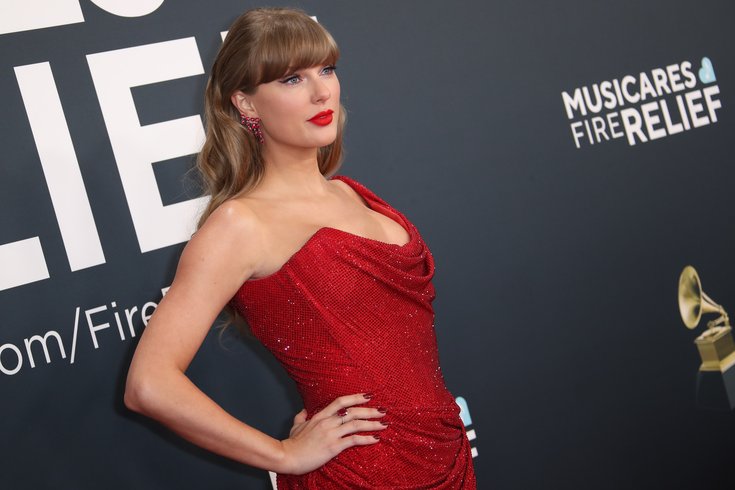 Dan MacMedan/Imagn Images
Taylor Swift is seeking to trademark a famous Eras Tour image of herself and clips of her saying 'Hey, it's Taylor,' and 'Hey, it's Taylor Swift.' Doing so may help protect her from AI misuse.
Taylor Swift has filed three trademark applications as part of an apparent move to deter AI-generated depictions of voice and image.
One of the filings seeks to trademark an Eras Tour photo that shows Swift holding a pink guitar and wearing a glittery bodysuit and boots. The other two are sound trademarks of the pop star saying "Hey, it's Taylor" and "Hey, it's Taylor Swift." She recorded the clips for Amazon Music and Spotify for the promotion of her last album.
MORE: Author uses billboard on I-95 to promote body autonomy and new book 'Fat Swim'
Josh Gerben, an intellectual property attorney, spotted the applications Monday. In a blog post, Gerben said that singers historically relied on copyright laws to protect their music. But AI tools allow people to make content featuring a celebrity's voice without using an existing recording. With a trademark, Swift could challenge identical reproductions and any imitations that are "confusingly similar," Gerben said.
If Swift's trademark applications are approved, she could claim in court that any AI-generated audio that sounds like her voice in the trademarked clips is a violation, Gerber said. The trademarked image would allow the Berks County native to pursue claims against images that depict her likeness.
Swift's likeness has been used in many AI-generated images and videos since the technology became widespread, including pornographic images and a 2024 election ad that falsely showed her endorsing Donald Trump for president.
"It really conjured up my fears around AI, and the dangers of spreading misinformation," Swift said in a social media post at the time. "It brought me to the conclusion that I need to be very transparent about my actual plans for this election as a voter. The simplest way to combat misinformation is with the truth."
In the past the singer has appeared to use AI to her advantage. In October, Swift released promotional videos for her album, "The Life of a Showgirl," and fans noticed some abnormal moments in clips, such as a squirrel briefly missing a fourth limb and a notepad with multiple fonts on the same page. Many suspected the videos were made using AI.
Earlier this year, actor Matthew McConaughey became the first celebrity to use trademarking to protect himself from AI misuse. In January, he filed eight applications to trademark videos of himself, including one that include his famous "alright, alright, alright," line from the 1993 movie "Dazed and Confused."