



September 04, 2026
 John Kopp/for PhillyVoice
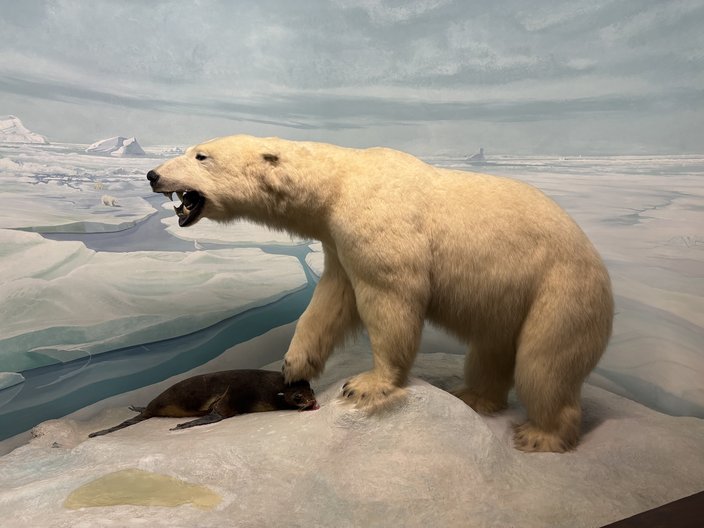
Most of the dioramas at the Academy of Natural Sciences were created in the 1930s and 1960s, using animals donated from expeditions or game preserves.
Aside from Haddy the dinosaur, the Academy of Natural Sciences is perhaps best known for its dioramas.
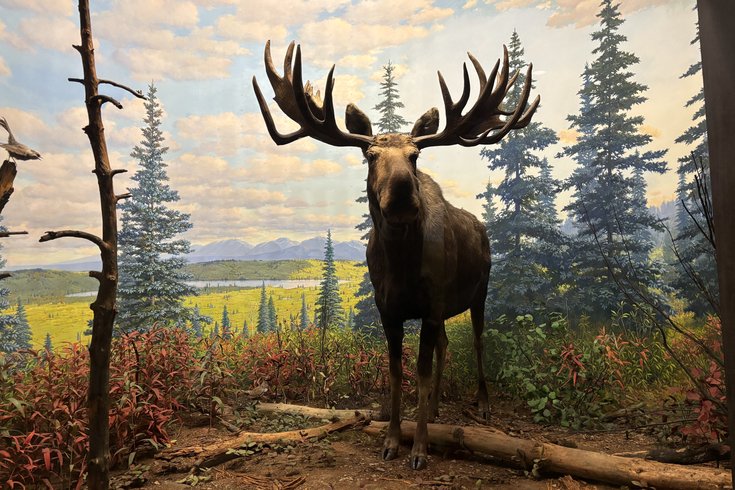
The displays, which span three floors of the academy's shuttering museum on Benjamin Franklin Parkway, feature real taxidermied animals arranged in approximations of their natural habitats. Think a moose in the woods or a polar bear roaring over its prey in the Arctic. In an era of smartphones and QR codes, exhibits like these can feel a bit antiquated, though that's part of their charm. And for the first visitors who saw them, they were nothing short of revolutionary.
By the academy's own count, there are 37 dioramas in its collections. Most of them were built between the 1930s and 1960s, when safaris were mostly inaccessible to the general public and Animal Planet was still several decades away. By constructing life-size scenes of gorillas and bears in their environments, the museum could get visitors pretty close to the real thing. They were also a dynamic improvement over the old organization; before the dioramas, the Academy of Natural Sciences simply placed its specimens in glass cabinets or roped-off platforms, grouping them together by animal type.
"In the late 1920s and early '30s when the dioramas were being built, the academy was a very quiet place," Robert Peck, the former artifacts curator for the Academy of Natural Sciences, said in a 2018 video. "Exhibition cases held birds, insects, minerals, specimens of all kinds, but there wasn't a sense of liveliness in these and it was the goal of the academy to make it as lively as possible."
Giving the animals a sense of place was a big part of that liveliness. The academy commissioned artists to paint vistas of the habitats, using photographic references for realism. Vegetation could be re-created by taking casts of real plant leaves collected by scientists. The curve of the diorama lent extra depth, too, making the exhibits appear bigger than they actually were.
The wildlife displays at the Academy of Natural Sciences put taxidermied animals in their natural habitats, recreated with painted scenes and fake plants.
As for the animals at the center of it all, they came from various expeditions in the first half of the 20th century. The gorillas, for instance, were captured during George Vanderbilt's 1934 exploration of West Africa; he later donated them to the academy, which opened the corresponding diorama in 1938. Expeditions to China yielded the takin, whose display opened in 1935. Occasionally, the animals didn't have to travel so far. Marie Trexler provided bison from her late husband's nature preserve, set over 1,108 acres in Lehigh County.
To preserve the animals for multiple generations, taxidermists saved the pieces that wouldn't rot — hides, fur, horns and hooves. Next, they covered a plaster model, itself cast from a clay sculpture made from photographs and measurements of the real specimen. The model got papier-mâché on the inside and a heavy coat of glue on the outside to attach the hide and fur. Glass eyes went in the empty sockets, fake tongues and teeth were secured to the mouth and horns and/or hooves were wired to the model to complete the look.
The dioramas will remain on display to the public at 1900 Benjamin Franklin Parkway through Sept. 27. (While the museum's official last day is Sept. 30, it is only open on weekends.) Curious visitors can learn more about their creation by visiting the "Secrets of the Diorama" exhibit on the second floor.
Follow Kristin & PhillyVoice on Twitter: @kristin_hunt
| @thePhillyVoice
Like us on Facebook: PhillyVoice
Have a news tip? Let us know.