





October 21, 2026
 Provided Image/Harry Smith
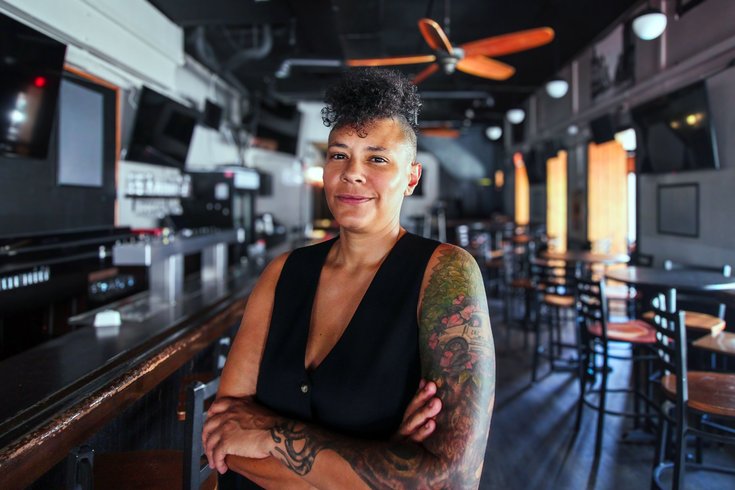
Marsha's owner Chivonn Anderson said she views the closure of the women's sports bar on South Street as a 'learning opportunity' for the future.
During the 13 months that Marsha's was in business, owner Chivonn Anderson said she's been hospitalized twice for stress-induced health problems, had threats directed toward her and her family, and found herself faced with so much debt that she's unsure if she'll ever recover.
Despite deciding to pull the plug on Philly's first women's sports bar last weekend, Anderson said the growing popularity of women's sports nationwide makes her confident the city is primed to welcome similar ventures in the future.
"Being involved with (Marsha's) has brought me into a different world of women's sports," said Anderson, 46. "Now I am more invested than ever."
Ashley Gardner, an assistant professor of instruction at Temple's school of sport, tourism and hospitality management, said the demand for dedicated spaces to watch women's sports is at an "all-time high," but she cautions that future business owners need to understand their community in order to succeed.
"It's been abundantly clear that Philly is indeed a women's sports town," Gardner said. "I think these public spaces should absolutely continue to develop and grow. They just have to be strategic and know their audience."
A report from Nielsen said viewership of women's sports has grown 71% since 2022 and there are more than 120 million fans of women's sports in the country. In Philadelphia, which is set to welcome a WNBA franchise in 2030, an Unrivaled 3-on-3 event in January drew 21,490 fans to Xfinity Mobile Arena, setting a record for attendance at a regular-season women's professional basketball game.
There are at least 27 women's sports bars in the country and another dozen are in the works, Front Office Sports reported last month.
Marsha's opened to great fanfare, but the business began to suffer after a public feud between management and a former bartender erupted online, Anderson said. The employee, a Black, trans woman, alleged in April that management created a hostile work environment against female and minority employees, and that she was terminated for expressing her concerns.
In the months after, Marsha's attempted to make amends with the community by hosting listening sessions. But foot traffic slowed, partnerships dissolved and the brand never recovered, Anderson said.
"Everybody dropped us because you're now this pariah," she said. "People don't want to be associated with you. The overarching picture just looked bad."
Anderson said she had been using personal funds to float the business for the past several months and ultimately closed Marsha's.
"It gets to the point where you have to look at things from a realistic standpoint," she said. "I was hoping that things would turn around, but unfortunately, they did not."
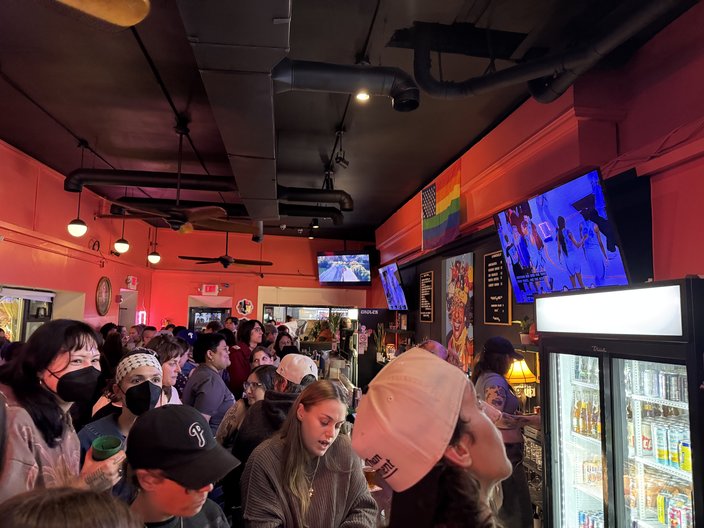
Marsha's opening night attracted a three-hour wait to get inside the women's sports bar.
Looking back at her business strategy, Anderson said she may have erroneously fast-tracked her hiring process and implemented too flexible of a human resources policy.
“If you showed up, had a pulse and knew how to make drinks, you got hired," she said.
But she also said expectations on queer-owned bars like Marsha's sometimes feels untenable.
"There's no space for grace and we're held at a higher standard than a straight business," she said. "I don't think anyone should be held to any higher standard than being a decent person. ... If I'm being held to a higher standard, then you need to operate at a higher standard."
Places that cater to marginalized groups are more susceptible to pushback, Gardner said, which makes having a strong internal culture even more important for success.
"This is a space particularly for women and queer folks, who have a tendency to be attacked more than many populations," she said. “They kind of did have a responsibility to facilitate an extra safe space. This is a niche community that needs to be protected in many ways. … You have to implement some extra practices and procedures to ensure that this space is really going to be a great space for the community.”
Watch Party PHL, a group of women's sports fans, are next in line. After years of searching for a permanent space, the owners are slated to open Stoop Pigeon at the intersection of Broad and Pine streets. The group initially had the goal of opening June 12, but have posted to social media that they have experienced delays in the construction and permitting processes. A representative with the bar did not respond to a request for comment on its timeline.
Stoop Pigeon has positioned itself as a "family friendly" establishment for sports fans of all ages, operating as a cafe and brunch space by day and a bar and restaurant by night. Owner Jen Leary said in March that she and her team felt "a lot of responsibility" to represent their fanbase accurately.
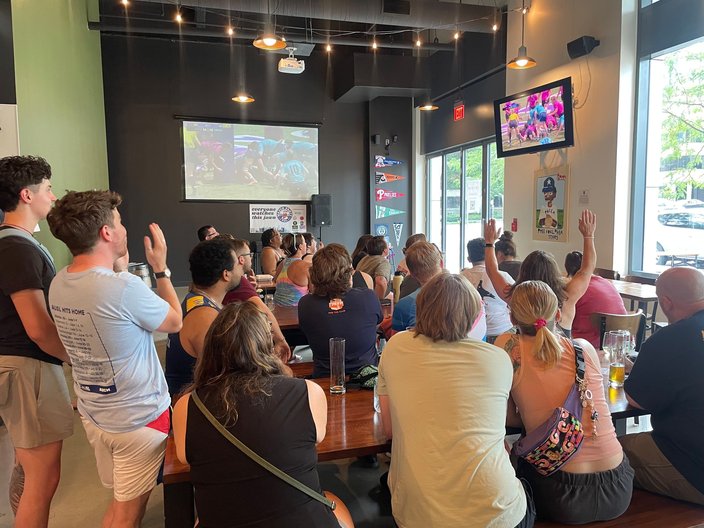
The concept for the Stoop Pigeon came from the Watch Party PHL group, which began hosting parties, like the one above, for women's sports in April 2024.
After Marsha's closure, Gardner said future iterations of women's sports bars will benefit by learning from the experiences that Anderson and her management team went through. Prioritizing building an inclusive culture, addressing controversies publicly and transparently, and fostering strategic partnerships will be key for business owners looking to get in on the women's sports hype, she said.
"Whenever women or the queer community are involved, you're going to have trolls trying to infiltrate the space externally and sometimes even internally," she said. "I think it's important to make sure that your organizational culture is on point and to make sure you're catering to your target market. … Once you lose support of the community, it's over."
Anderson remains the sole owner of the Marsha's site at 430 South St., and said "in a perfect world," she would rent the space to business owners who are interested in maintaining it as a women’s sports bar or a safe space for the community. But she also said it may not be likely to manifest that way.
"It's going to be what makes sense financially," she said. "I know a lot of queer people hate talking about things like (Marsha's) as a business, but that’s the reality of what it is.
"But I want to figure out a way to continue in this world, because I believe everything in my life has brought me to this particular moment. I will continue to try to be the best version of myself and to provide spaces for my people. … I look at everything that happens as a learning opportunity."