




October 07, 2026
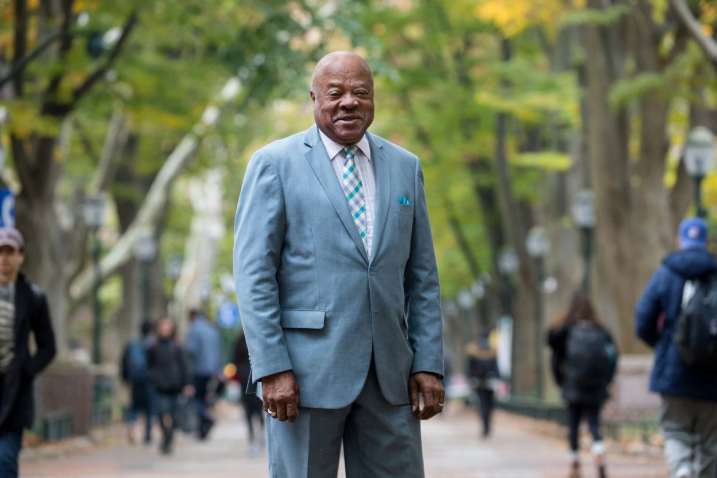 Provided Image/Walter Palmer
Walter Palmer, once a resident of the Black Bottom neighborhood in West Philly, has spent his life advocating for his former neighbors. On his 92nd birthday, he is having a street renamed in his honor.
Growing up as one of 12 children in a two-room apartment in Black Bottom, Walter Palmer loved the sense of community he found in the West Philadelphia neighborhood.
"People really took care of you, they made sure that you were eating, made sure you were warm," Palmer said. "It had its ups and downs with fights and rivalries and vendettas, but it was a loving, nurturing, caring and protective community."
MORE: Most banned book in America was written by Rosemont College grad
The predominantly Black neighborhood was established during the Great Migration in the early part of the 20th century. A number of Black-owned businesses were located there, and many residents owned their own homes.
"I loved going around visiting people," Palmer said. "I used to go visit the elderly, older people; I used to go visit the sick people. I used to love walking the streets and checking on the children, playing jump rope and the hopscotch."
But in 1949, a new housing law allowed local governments to purchase blocks and neighborhoods that were considered blighted and clean them up. In the 1960s, the city and the Redevelopment Authority used urban renewal funds to buy homes in Black Bottom and knock them down so the University of Pennsylvania and Drexel University could add new buildings. That meant that residents, like Palmer, were forced to leave, and he spent several decades advocating for the people who once lived there.
Palmer has taught classes on American Racism and Institutional Racism and Social Change at Penn since 1990, teaching students about the Black Bottom. He founded the former Walter D. Palmer Leadership Learning Partners Charter School, which focused on Black history, social justice and leadership. He also founded Black Men at Penn School of Social Work, which serves as a conduit between the Black community and Penn's School of Social Policy and Practice.
In 1976, Palmer established the Black Bottom Community Association to attempt to preserve the neighborhood's history and recognize the community members who fought against its demolition. Palmer was nationally recognized as a grassroots organizer during the civil rights movement and, in the 1980s, served as a negotiator between the city and the MOVE group. He has organized community mental health and anti-violence efforts, also co-founded the Black Student Union and Black Student League groups at Temple University and Penn.
With the neighborhood again to be called Black Bottom, Palmer said it's important for advocates to identify former residents and their descendants, how they were impacted by the neighborhood's upheaval and the type of support they most need. He recalled one resident whose husband died shortly after homes were demolished, saying she was one of many who blamed Penn for hardships that took place after residents were forced to move. Many older adults, he said, struggled to get new mortgages.
Palmer would like to see full financial reparations, but he said the neighborhood renaming is a good starting point toward justice. It's mostly a symbolic gesture, because it doesn't make any legal changes, but it goes a long way toward recognizing what former residents went through, he said.
"A lot of this is symbolic, but it's all motivational, too. It was a community that was resilient and resisted Penn," Palmer said. "(The renaming) is just hope for me that we've lost this community, but hopefully other communities won't be destroyed and (will) be inspired by our fight and importance of community and neighborhood and family and extended family."
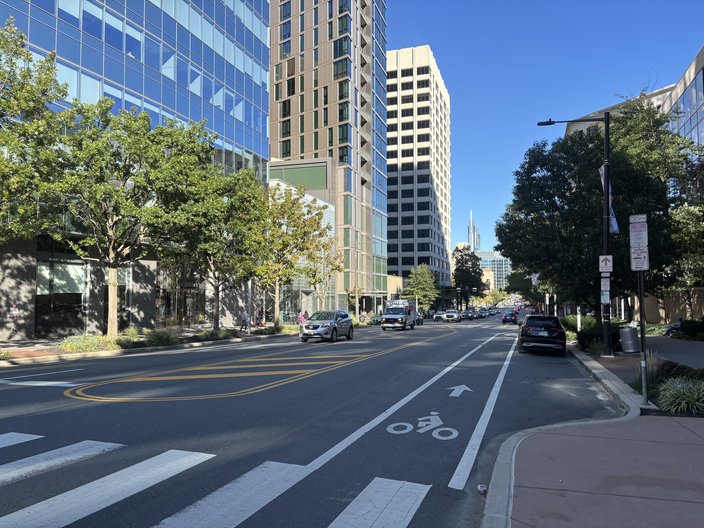
The 3600 block of Market Street is being renamed in honor of Walter Palmer, who spent decades advocating for the former residents of West Philly's Black Bottom neighborhood.
Although the removal of Black Bottom happened more than 60 years ago, Palmer said universities still take advantage of neighboring communities as they seek to grow. In his opinion, many collegiate boards of trustees are not interested in education. Rather, he said, they're interested in tuition revenue that can subsidize their primary goal to add real estate. Incoming students, he said, need to balance their own needs with the fact that many schools are pushing out longtime residents in favor of student housing.
For some, he said, that might mean choosing alternative education methods like online schooling. For others, it might mean continuing Palmer's efforts to build resilient communities, including some of the planning and organizing work that Palmer specialized in.
"It's not sexy, you don't get a lot of publicity about it, but without planning, there can be no change," Palmer said. "And all the courses I teach at Penn, I put in there organizing the change. Once you find the problem or you've seen the problem, you have to solve the problem, and there can be no change without planning. If you fail to plan, you're planning to fail."