






January 23, 2026

 Source/Image licensed from Ingram Image
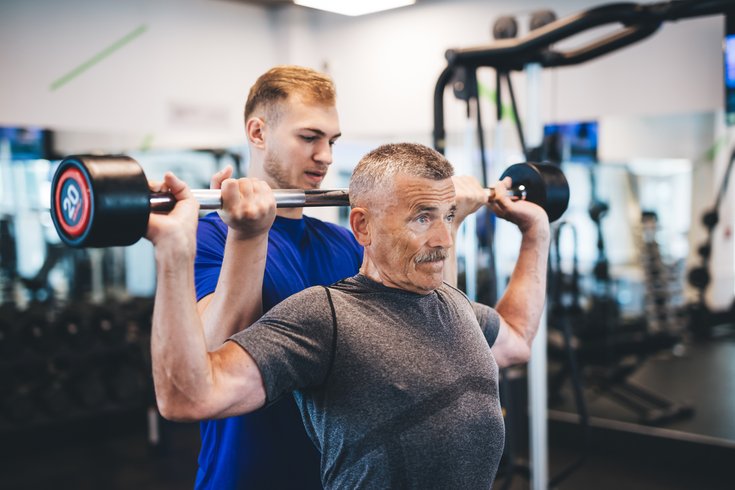
Having more muscle and less belly fat helps mitigate cognitive decline, new research shows. Strength training helps people maintain muscle as they age.
If television commercials and sales volume are any indication that people are worried about their brain health, then the answer is an unequivocal yes. It seems like you can't watch TV for more than a few minutes without seeing an advertisement touting a vitamin or dietary supplement as a way to improve your memory and brain function.
The brain health supplements market in the United States was valued at $3.5 billion in 2024 and is expected to nearly double by 2030, Grand View Research reports. Studies on cognitive decline support this fear and the enormous reliance of an aging population on these supplements, but new research suggests there may be an alternative. It's a more natural way to boost your brain health, fight off the cognitive effects of aging and reap other benefits.
Concerns over cognitive decline among the aging population are well grounded in science. The journal Frontiers in Aging Neuroscience reports that aging is among the contributing factors of physiological cognitive decline, noting that "the effect of aging on cognitive functions is the largest and most consistent influence documented by extensive research."
Echoing these findings, the Journal of Clinical Investigation reports that cognitive decline and neurodegenerative changes are appreciable with advancing age. They say that as early as our 30s, core cognitive abilities, including processing speed, reasoning, episodic memory and spatial visualization begin to decline. The diminishment is small, yet consistent across our lifespans. With Mother Nature working against us, it's not surprising that baby boomers, Generation X, and maybe even millennials are looking to maximize their cognitive functioning as long as possible.
In 2021, the AARP surveyed adults 50 and older and found that nearly 80% take a vitamin or dietary supplement and that 21% take a vitamin or dietary supplement for their brain health. It also showed that 71% wanted to maintain or improve their memory, 60% wanted to maintain or improve mental sharpness, and 12% take a supplement to delay dementia.
In September, I cited an earlier AARP survey that found three-quarters of adults age 40 and older are concerned about their brain health declining in the future. The National Institute on Aging is among various institutions that have reflected on the concerns about aging and brain health. It notes older adults worry about their memory and other thinking abilities. Coupled with the sales data on vitamins and supplements, these findings paint a picture of generations looking to do whatever they can to maintain their cognitive abilities.
The problem with supplements is found in a report from the University of Michigan that questions their effectiveness. According to the University's Institute for Healthcare Policy & Innovation, "no major research studies support the effectiveness of supplements to enhance memory." The experts at Michigan further indicated that studies on dementia show that few poll respondents discuss their concerns with their doctors, a potentially more effective way to apply evidence-based approaches to prevent or delay cognitive decline. Consistent with this message, new research indicates there is indeed an evidence-based alternative to keeping your brain young and doing it in a more natural way.
A study of 1,164 healthy adults with an average age of 55 — roughly half men and women — based on comprehensive brain scans found that "those with high muscle mass and lower visceral fat showed significantly younger brain ages than their chronological years would predict."
Visceral fat is the deep abdominal fat surrounding internal organs. It differs from the subcutaneous fat just under our skin, which is often the focus of our cosmetic attention. The findings were presented at the annual meeting of the Radiological Society of North America by Dr. Cyrus Raji, associate professor of radiology and neurology at Washington University School of Medicine in St. Louis.
Raji noted that "better brain health, in turn, lowers the risk for future brain diseases, such as Alzheimer's." In short, the researchers characterized their results as showing that more muscle and less belly fat slows brain aging, demonstrating that resistance training can be an effective neuroprotective strategy.
The findings are consistent with prior research showing that resistance training can support cognitive health, and further, provide an empowering, evidence-based alternative to supplements, and one which conveys other benefits.
Commenting on the study's implications for adults over 50, fitness trainer Dash Hartwell said resistance training (weight lifting 2-3 times per week) is the primary driver of muscle mass and that visceral fat "often responds relatively quickly to lifestyle intervention." He cited dietary changes that reduce refined carbohydrates and processed foods, adequate sleep and stress management.
As to how best to approach resistance training, Hartwell said "the key is progressive overload: gradually increasing demands over time to continually stimulate adaption." The goal, Harding said, is "body composition optimization."
The American Cancer Society agrees. The organization says strength training can benefit men and women of all ages and suggests that two or three, 20- to 30-minute training session each week can produce significant benefits including the ability to reverse the loss of muscle mass associated with age. Other benefits include stronger bones, joint flexibility, weight control and better balance.
Mental health and well being has been a big part of my advocacy for men over 50. The logic is simple. If we want to maximize our quality of life and enjoy every bit of what life has to offer, we need to be both physically and mentally sharp. I won't tell you it's easy, but I will tell you that the fulfillment it can bring you is incredible.
And, let me remind you, when you get into rhythm and healthy living becomes ingrained in your life, what was once a tedious chore becomes another source of enjoyment. Our brains are at the center of our functional fitness; we need to attend to their wellbeing.
The best part is that this new research reinforces the point that what's good for our mind is good for our body, and that's a great return for the best investment you'll ever make.