






April 28, 2026

 Larry McCormack/Imagn Images
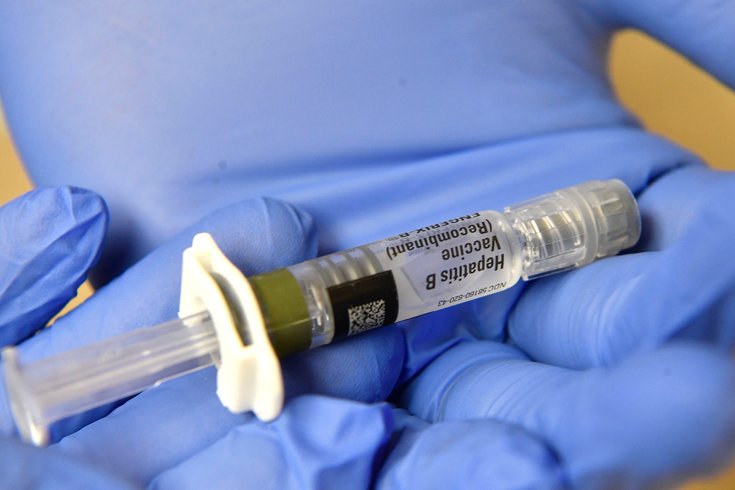
In December, the Trump administration reversed longstanding recommendations to give all newborns the first dose of the hepatitis B vaccine within 24 hours of birth. Two new studies suggest hundreds of additional childhood infections could result.
Chronic hepatitis B is incurable and can lead to liver failure and death. Because not all pregnant women get the recommended hepatitis B screening, some newborns are exposed to the disease, putting them at risk.
About 90% of newborns infected with the virus develop chronic hepatitis B. About 25% of people who get hepatitis B during childhood die prematurely from liver disease or cancer, the Centers for Disease Control and Prevention says.
MORE: Running the Broad Street Run on Sunday? Here's how to treat the final days before the race
That is why the American Academy of Pediatrics has had long-standing recommendations that all newborns receive the hepatitis B vaccine at birth. The vaccine has been used since the mid-1980s and is safe and effective.
But the CDC controversially ruled in December to recommend delaying the first shot of the hepatitis B vaccine in infants born to women who tested negative for the virus until two months after birth – even though screening can be inconsistent and people with hepatitis B can be asymptomatic.
New research now indicates this delay will cause hundreds of more cases of liver cancer and death and lead to more than $20 million in extra health care costs for infants born during the first year after implementation of the new recommendations.
"These 2 studies were exceptionally well done and rigorous in their approach, assumptions, calculations, and conclusions," Arthur Reingold, emeritus professor of epidemiology at the University of California at Berkeley's School of Public Health, told the Washington Post in an email.
Starting in 1991, the federal advisory committee responsible for making vaccine recommendations advised that all infants be vaccinated against hepatitis B within 24 hours of birth. Childhood cases of hepatitis B dropped by 99% in the years that followed, according to an editorial in JAMA Pediatrics, published alongside the new research Monday.
The Trump administration overhauled the advisory committee's membership last year, leading to the change in recommendations. They now say women who test negative for hepatitis B can decide with their providers to delay the first shot until their babies are 2 months old. The CDC said the new advice was based on a "rigorous review of available evidence."
The rates for infants getting the first dose of the hepatitis B vaccine at birth already were declining prior to the December change. Also, about 15% of pregnant women are not screened, and about 50% of women who test positive for hepatitis B infection do not get the recommended treatment, the JAMA editorial says.
In changing the hepatitis B vaccination recommendations, "the committee did not consider the harms of delaying vaccination during a period when infants are at the highest risk of chronic liver disease, liver cancer, and deaths attributable to ... infection," the JAMA editorial says. "In essence, the policy question they considered did not include any consideration of the long-term health of infants."
The recommendations also did not give evidence that postponing the first dose of the vaccine would reduce harm to infants or offer any other benefits, the editorial says.
Even with the recommendation that all newborns get the first hepatitis B vaccine dose at birth, about 1,300 infants still become infected, according to one of the new studies led by Rachel Epstein, a pediatric and adult infectious diseases clinician at Boston Medical Center.
Epstein and her team devised a model showing that an additional 628 babies would become infected each year if only 10% babies born to mothers who were unscreened received a birth dose.
"One of the most concerning implications is how many more infected hep B babies will we see," Epstein told the Washington Post. "A universal birth dose helps prevent a substantial number of infections in babies of a lifelong condition that we do not have a cure for."