



September 10, 2026
 Chris Compendio/for PhillyVoice
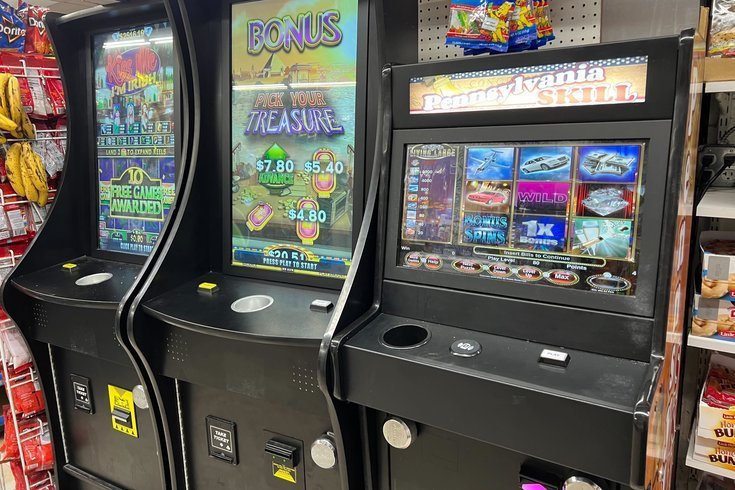
The Pennsylvania Supreme Court gave state lawmakers an Oct. 13 deadline to regulate skill games. Without gaming reform to address the gambling terminals, which were found unconstitutional, police could start seizing the machines and earnings from them next month.
Pennsylvania State Police are warning businesses with skill games that their machines could be seized next month as a deadline looms for lawmakers to regulate the video game terminals. The Supreme Court ruled in June that skill games are equivalent to slot machines, making them unconstitutional in the absence of state gaming reforms.
About 70,000 skill games are spread across the state in corner stores, taverns, restaurants, gas stations, laundromats and fraternal organizations that rely on them to generate revenue. The machines are not taxed and licensed the way slot machines are at casinos, and the Supreme Court gave the state legislature until Oct. 13 to come up with a solution.
MORE: PPA explains why it refunded more than $1.25 million worth of speeding tickets
If a bill isn't passed by then, state police said the terminals and the revenue they generate will be subject to seizure.
"Slot machines are considered gambling devices under the Crimes Code, and a person commits a criminal offense by owning, operating, or maintaining slot machines without a license issued by the Pennsylvania Gaming Control Board," state police said Thursday.
As of Oct. 14, businesses could be required to forfeit their machines and earnings to state police or other law enforcement agencies. In some cases, criminal charges may be considered, police said.
Business owners are being advised to discuss their removal with distributors and vendors, who typically own and lease the machines. Turning skill game terminals off and unplugging them will not be considered compliant with state law.
The Supreme Court's ruling in June came after a review of lower-court cases assessing whether skill games require abilities that go beyond the element of chance in regulated slot machines. The justices found that though skill can affect outcomes, chance is the primary factor in their operation.
Since June, lawmakers have proposed several bills that would regulate and tax skill games at varying rates.
Gov. Josh Shapiro (D) has called for a 52% tax rate — 3% below the rate for casino slots — with skill game revenue directed to the state's general fund.
A bipartisan proposal sponsored by state Rep. Danilo Burgos (D-Philadelphia) and state Sens. Anthony Williams (D-Philadelphia) and Gene Yaw (R-Lycoming), among others, would charge businesses a $500-per-month flat fee to operate skill games. The sponsors of the House and Senate bills project the fee would generate $300 million in revenue in the first year. Most of those funds would go to the state, but a portion would be reserved for municipalities to administer zoning and safety standards.
Another bill, proposed this month by state Rep. Russ Diamond (R-Lebanon), calls for a 20% tax on skills games and a limit of five machines per establishment. Diamond's bill would funnel revenue toward property tax relief, the state's Race Horse Development Trust Fund and gambling addiction treatment with additional taxes going to the general fund.
Pace-O-Matic and Miele Manufacturing, two of the largest providers of skill games, have backed the bipartisan solution. Yaw also proposed a separate bill that would only tax skill games at a rate of 16%. Miele Manufacturing is based in Yaw's district.
In the months since the Supreme Court ruling, small business owners have spoken out about their reliance on skill games to survive. The state's Independent Fiscal Office estimates each machine generates an average of about $47,000 a year. Many businesses and nonprofits, including local VFW outposts, depend on skill game revenue to pay employees' health insurance costs and other vital expenses.
After years of legislative debate about gaming reform, the Supreme Court's ruling has brought viewpoints on skill games to a head. In Philadelphia, City Council banned the machines in 2023, citing their concentration in poorer neighborhoods, but the law could not be enforced due to the Supreme Court's review. Mayor Cherelle Parker has called skill games "predatory" and said she's in favor of tighter regulations.
"In no way, shape or form do I think these slot machines should be in our neighborhoods already struggling from socioeconomic and public safety issues," Parker said in a statement in June. "If they are going to go anywhere, they should be in private clubs and casinos. They should not be accessible to our children or in our most vulnerable communities."
City officials and Philadelphia police did not immediately respond Thursday when asked whether police are planning any outreach to business owners with skill games and if police would participate in seizing machines.
State police said that if skill game vendors and distributors are unwilling to remove machines, businesses are encouraged to reach out to state police to assist with their removal.