






October 16, 2026

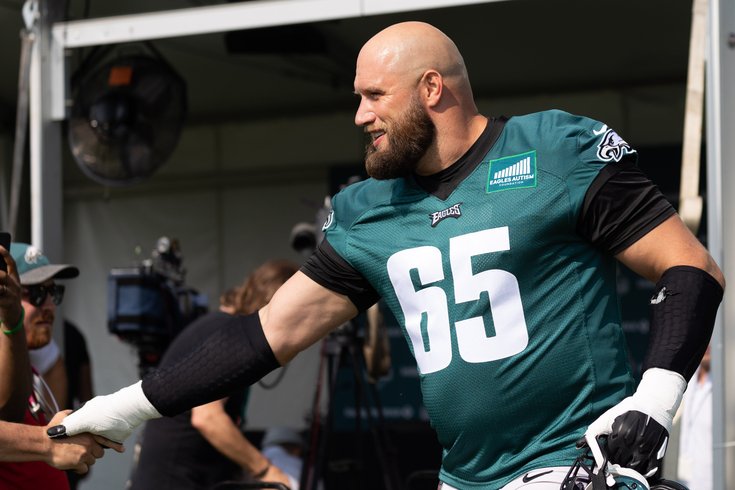 Colleen Claggett/for PhillyVoice
Retired Eagle Lane Johnson, shown in 2023, helped break down mental health stigmas by speaking candidly about his experiences with depression.
Lane Johnson certainly will be remembered for the magnitude of his contributions to the Eagles: two Super Bowl championships, multiple All-Pro selections, and a likely first-ballot induction into the Pro Football Hall of Fame.
Over time, however, his impact away from football may prove to be even more consequential than his achievements on the field. Four years ago, I highlighted the courage of former Eagles Brian Dawkins and Malcolm Jenkins, along with Johnson. Each had publicly discussed their experiences with depression. I described them as role models because they challenged long-standing cultural expectations and traditional ideas about masculinity that, not very long ago, made such admissions nearly unthinkable.
Their disclosures — particularly as NFL players — helped redefine what strength could look like and encouraged other men to acknowledge their struggles and seek help. Dawkins and Jenkins continue their advocacy for men's mental health. Let's hope Johnson will join them.
For years, the stigma surrounding mental illness kept Johnson from telling anyone what he was experiencing. Eventually, however, his distress became so severe that it produced intense nausea and other physical symptoms. He ultimately sought treatment and stepped away from football for three games in 2021. At the time, his disclosure offered a powerful sign that attitudes toward mental health were beginning to change. Johnson received widespread support from teammates, fans and people on social media, making his decision an important moment for men's health.
Earlier this month, Johnson abruptly announced his retirement from the NFL, acknowledging the need to focus on his mental health as one of his reasons. In his statement, Johnson explained that he no longer can give football his full emotional and physical commitment.
"Right now, it is critical that I focus on my mental health," he said. "I owe it to my teammates, coaches, the organization and the fans to have my head and heart 100 percent in the game."
His announcement naturally prompted debate about football implications. Yet, based on the callers I heard on SportsRadio 94WIP, it also inspired numerous men to speak publicly about their own struggles and credit Johnson with encouraging them to seek help.
Johnson became the central figure in the Eagles' locker room on mental health and one of the NFL's most visible and candid advocates on the subject. He has been credited with helping reduce stigma inside the locker room. His willingness to speak openly contributed to a cultural change within the Eagles organization. Teammates including Jordan Mailata and Andre Dillard credited him with "opening up a pathway" for players to discuss their own psychological burdens. As a veteran leader, Johnson regularly checked on younger players and said his personal experience helped him recognize warning signs in their body language.
Johnson's influence on men's mental health was significant because he challenged deeply rooted assumptions about masculinity. Men have historically been encouraged to conceal vulnerability, while football frequently rewards aggression, toughness and the ability to play through pain. Against that backdrop, Johnson — a 6-foot-6, 325-pound elite athlete — demonstrated that physical strength and emotional vulnerability are not opposites.
One of his most important contributions was challenging the expectation that men should simply "tough it out." For decades, men experiencing emotional distress have often been told to "man up," remain silent or manage their problems alone. Johnson confronted that message by showing that anxiety and depression can affect even an accomplished athlete competing at the highest level of an intensely physical sport. By acknowledging that his symptoms made him physically ill and required him to step away from football in 2021, he gave other men permission to say when they were not OK. His experience reinforced that mental illness is not determined by physical strength, wealth, status or professional success.
Johnson also helped redefine vulnerability as a form of strength. He repeatedly argued that asking for assistance is an act of courage rather than cowardice. He described the exhausting burden of concealing mental health struggles and emphasized that genuine strength begins with honesty. For male sports fans accustomed to watching him dominate opponents on Sundays, hearing a likely future Hall of Famer deliver that message carried unusual cultural weight.
Outside the locker room, Johnson spoke at mental health clinics and regional events throughout the Philadelphia region. He also served as an ambassador for Kooth, a platform that offers free and confidential digital mental health services and resources to young people in Philadelphia.
During his final years in the NFL, Johnson used a variety of media platforms to amplify the experiences of other athletes. He launched an ongoing mental health column for The Philadelphia Citizen titled "Season of Strong Mental Health." Through the series, he documented coping strategies — including meditation and avoiding isolation — while highlighting the recovery experiences and mental health foundations of other NFL players, including Maxx Crosby.
In recognition of his extensive work beyond football, the Eagles selected Johnson as their 2023 Walter Payton NFL Man of the Year nominee. His efforts to increase mental health awareness represented a major component of that nomination and illustrated how closely his public service had become connected to his personal experience.
Another important contribution was Johnson's willingness to normalize therapy and medication for men.
Men are generally less likely than women to seek counseling or consistently use prescribed psychiatric medications, in part because of social stigma. Johnson helped remove some of that shame by speaking candidly about taking the antidepressant Paxil, experiencing withdrawal symptoms and meeting regularly with therapists and sports psychologists.
By discussing mental health treatment in the same practical terms used for physical rehabilitation, he offered men a more accessible and stigma-free model for managing their well-being.
Johnson's actions also helped create new opportunities for emotional connections among men. Conversations in locker rooms and other male-dominated workplaces commonly center on sports, humor, competition or work rather than emotional health. Johnson challenged that pattern by initiating meaningful personal check-ins with teammates. In doing so, he modeled for younger players how men can support one another without embarrassment or judgment. His example suggested that camaraderie involves protecting a teammate's emotional well-being as seriously as protecting him on the field.
When Johnson retired, he left behind more than a legacy of dominant blocks, playoff victories and championships. He also contributed to a cultural shift that made it more acceptable for men to acknowledge emotional distress and ask for help. Prominent athletes and ordinary fans alike have credited Johnson with giving them the courage to discuss their own internal struggles.
Because of his imposing physical presence and elite status in a high-intensity sport, Johnson's message carried particular weight among men who might otherwise have dismissed conversations about mental health. The remaining question is whether he will continue using that influence in retirement.
I have not seen a definitive public statement confirming that Johnson intends to continue his mental health advocacy after retirement. Still, his previous comments and sustained commitment to reducing stigma suggest that continued involvement is reasonably likely. His advocacy has never appeared to be a short-term campaign or merely an extension of his football identity. If he chooses to remain engaged, retirement could give him more time and flexibility to expand that work. We should hope he does, because his credibility, experience and voice remain deeply valuable.