




October 28, 2026
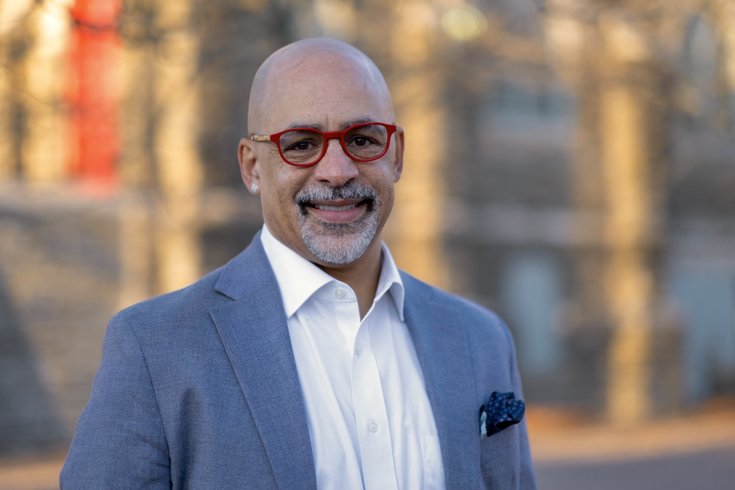 Provided image/Rabb for Congress
Chris Rabb, a self-identified democratic socialist, is poised to take Dwight Evans' former seat in U.S. Congress. Is it a sign of increasing progressive strength in Philly?
This spring, state Rep. Chris Rabb cruised to an easy victory in the Democratic primary election to replace retiring U.S. Rep. Dwight Evans in Pennsylvania's Third Congressional District. His win was notable not just because he overcame Sharif Street, who belongs to a Philly political dynasty, or Dr. Ala Stanford, Evans' chosen successor, but because Rabb identifies as a democratic socialist.
Democratic socialists are not an official party. The progressive faction is represented by the Democratic Socialist of America, an organization that counts New York City Mayor Zohran Mamdani, U.S. Rep. Alexandria Ocasio-Cortez and Pennsylvania Rep. Nikil Saval among its ranks. The Philadelphia DSA chapter, which claimed hundreds of new members in the wake of Rabb's primary election, credited the "work of thousands of working class people across Philadelphia organizing for a better world" with his win. Given the district's deep blue electorate, he is all but assured a general election victory next week. So should Philly prepare for a lot more DSA politicians?
Experts caution it's not that simple. Richardson Dilworth, the head of Drexel University's politics department, and Daniel Hopkins, a political science professor at the University of Pennsylvania, both say the DSA's national gains are apparent. But Rabb benefitted from several factors that may not be replicable every election year. On top of that, his district, which spans much of Northwest and West Philadelphia, isn't exactly a hotbed for leftist voters.
"Pennsylvania's Third Congressional District is one of the most Democratic-leaning congressional districts in the country," Hopkins said. "But that doesn't mean that it is one of the most liberal congressional districts in the country."
Philadelphia has seen a push and pull between the progressive and centrist wings of the Democratic Party in recent elections. In 2023, the DSA-endorsed, Working Families Party candidates Kendra Brooks and Nicolas O'Rourke won at-large seats, kicking Republicans out of positions they'd held for seven decades and making WFP the minority party in council. But that same year, Cherelle Parker defied expectations and defeated more progressive candidates like Helen Gym and Rebecca Rhynhart to become mayor.
Now, with Donald Trump back in the White House, political scientists are observing the so-called "thermostatic" model of public opinion. The phenomenon describes the tendency of the electorate to swing in the opposite political direction in response to new policies. It's returned, just as expected, under "a second-term relatively unpopular Republican incumbent who's pushing, not moderate policies, but in some instances, including immigration, relatively extreme policies," Hopkins said.
The Penn professor also believes Rabb won over "disaffected" liberals who "believe that the Democratic establishment didn't fight hard enough to prevent Donald Trump from winning a second term and then hasn't stood up to the Trump administration with enough force." Being an outsider, anti-establishment candidate — which is exactly how Rabb pitched himself — made him appealing, as did his views on Palestine. In exit polling for the primary race, Hopkins observed that "a sizeable number of people" shared Rabb's view that what is happening in the region is a genocide.
Dilworth posits that many Philly voters are driven not by specific Democratic ideology, but tangible constituent services like fixed potholes and resolved trash fees. Since Democrats have controlled City Hall since 1952, they've had ample time to demonstrate their capacity to resolve these issues and, in term, strengthen their party's position.
"Constituent service is a way that elected officials do stuff that isn't really their job, but which is incredibly important for building up political allegiance among their constituents," he explained. "Because it's face-to-face contact, and it's real service delivery. Given the nature of formal service delivery in the city and the nature of district council people, they have a real chance to do something for their constituents."
As Dilworth explains, Philly has long welcomed third parties from the City Party to the colonial-era Gentleman's Party. But in recent history, he feels progressives most noticeably increased their electoral strength at two moments: the 2004 presidential election and Bernie Sanders' 2016 campaign for president. The former paved the way for Philadelphia Neighborhood Networks, a progressive booster formed in the wake of John Kerry's defeat to George W. Bush. The latter created the activist organization Reclaim Philadelphia. It also endorsed Rabb in his 2026 primary.
The future remains murky for the DSA and other progressive blocs of the Democratic Party in Philadelphia. But both Dilworth and Hopkins say depressed voter turnout has made many races ripe for the taking — regardless of where the candidate falls on the liberal spectrum.
"If Chris Rabb ever faces an electoral challenge, or certainly in the near term, it's not going to be an electoral challenge in the general election from a Republican," Hopkins said. "It's going to be an electoral challenge in the primary from a Democrat."
Follow Kristin & PhillyVoice on Twitter: @kristin_hunt
| @thePhillyVoice
Like us on Facebook: PhillyVoice
Have a news tip? Let us know.