




September 14, 2026
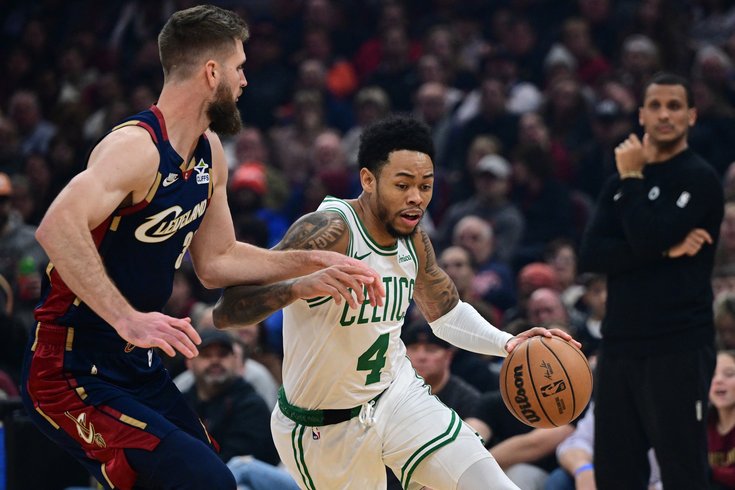 David Dermer/IMAGN IMAGES via Reuters Connect
The Sixers used the non-taxpayer's mid-level exception to land the two players slated to be their top reserves, Dean Wade and Anfernee Simons.
When the Sixers entered last year's playoffs, how many of their players deserved to be playing high-leverage minutes?
Tyrese Maxey, Joel Embiid, VJ Edgecombe and Paul George were all clearly capable of stepping up in playoff games. And they all did. After that, the questions began: Kelly Oubre Jr. and Quentin Grimes, two quality rotation players, were asked to do too much. Andre Drummond and Adem Bona took turns largely disappointing behind Embiid at center. Dominick Barlow and Justin Edwards, in their first chances to play major minutes, had little to no impact. The New York Knicks, armed with a legion of playable, gutsy options, soundly swept the Sixers in the second round.
This dream offseason that is about to come to a close for the Sixers will forever be defined by its high-level acquisitions – first the blockbuster trade to turn George into 2024 NBA Finals MVP, then the signing of LeBron James. But in his first summer on the job, Sixers President of Basketball Operations Mike Gansey has also demonstrated a specific focus on accumulating quality depth up and down the roster – and signing the NBA's all-time leading scorer to a veteran's minimum contract certainly helped that effort.
In this week's 5 Sixers thoughts, categorizing the team's 14-player standard roster in terms of relevance to head coach Nick Nurse's rotation:
The Sixers will not always have this entire group available – in fact, they may be forced to fill one of these five spots more often than not – but when Maxey, Edgecombe, Brown, James and Embiid are all available, Nurse no longer has to think about which five players he will have on the court to start games.
Last season, Nurse had to adjust his starting lineup quite often. Drummond and Bona both had runs as the starter when Embiid was sidelined. Nurse spent significant chunks of last season starting two of Oubre, George and Barlow in his forward spots, but rarely had all three of those players available. A slew of late-season injuries forced him into a constant shuffle; MarJon Beauchamp started a game the Sixers needed to win last season.
There is an enormous amount of offensive firepower within this group, and it is inevitable that there will be some degree of diminishing returns with five players this good. But that does not mean the Sixers cannot become an excellent team – or that their starting five will not be successful.
Ultimately, though, the Sixers' superpower is going to be their ability to always have multiple high-octane scoring threats on the court. Staggering stars has always been a key component of Nurse's substitution patterns, and he will have plenty of tantalizing combinations to experiment with. And even on nights Embiid is sidelined, the Sixers' worst lineups could be anchored by Brown and Edgecombe. That is an enormous luxury.
MORE: How should Nick Nurse stagger his starters?
As the Sixers mulled the futures of their two primary free agents, Oubre and Grimes, it made sense to either retain both or let each of them depart. Splitting the difference was not all that viable; re-signing either of the two players and letting the other go would shorten the Sixers' depth and render them incapable of using the non-taxpayer's mid-level exception.
The Sixers had to let Oubre and Grimes go to access the full mid-level, valued at four years and a maximum starting salary of about $15 million. But there were no guarantees that the Sixers could use that money to upgrade from what they were losing. Sure, they could definitely find a player better than Oubre and Grimes with the full mid-level, but could they utilize that spending power to improve without sacrificing even more depth?
Then Gansey did excellent work, securing the services of Dean Wade and Anfernee Simons at reasonable price points, using up exactly $15 million in spending power and upgrading from Oubre and Grimes:
| Player | Contract | Details |
| Dean Wade | Four years, $38.7 million | $1,650,000 guaranteed in fourth season |
| Anfernee Simons | Two years, $12.3 million | $6,300,000 player option in second season |
Particularly on a team like this one, Wade and Simons offer more utility than Oubre and Grimes would have. That is not even accounting for price; Grimes on his own secured a four-year, $60 million deal with a player option that the Sixers should have seen as much too rich for their blood.
Now, the Sixers have their top two reserves locked in. One is a true Swiss Army knife; Wade's portability on both ends of the floor is a cheat code for Nurse and will enable the 29-year-old to be helpful in any lineup. The other is one of the best three-point shooters in the league; Simons' long-range prowess will help a team that was in the bottom third of the NBA in volume and efficiency from beyond the arc last season.
Their exact roles might change from night to night, but Simons and Wade will absolutely have roles every night. They rightfully project to be this team's top two reserves, ahead of a pack of players battling for Nurse's final rotation spots.
SIXERS FILM STUDIES
Jaylen Brown's strengths | Jaylen Brown's weaknesses
Anfernee Simons | Dean Wade | Ariel Hukporti
Nurse has always preferred to utilize a nine-man rotation during the regular season. If he sticks with that look, there are two regular spots up for grabs. By default, one of them must be a center, and the Sixers seem determined to give Bona and newcomer Ariel Hukporti chances to establish themselves as quality backup fives. Perhaps down the line Barlow will be viewed as an option as a small-ball center, but the guess here is that Nurse will give Bona and Hukporti every opportunity to keep the team sized traditionally.
That leaves one spot for a group headlined by but not limited to Barlow and Kentavious Caldwell-Pope.
It is difficult to imagine Barlow, a starter for the majority of last season, not cracking the rotation. He is such a uniquely excellent fit alongside Embiid that, even with James in the fold, there should be a path to minutes at the four for Barlow. He told PhillyVoice earlier in the offseason that he is "willing to play wherever," and has been doing extensive work on his shooting mechanics to try to repair that weakness in his game.
Caldwell-Pope has the track record Barlow does not as a two-time championship starter. His days of starting for title-contending teams are behind him, but the Sixers clearly believe that Caldwell-Pope, 33, has quality minutes left in the tank. If he does, his reliability as a catch-and-shoot player and perimeter defender would be valuable on this star-laden team.
The Barlow vs. Caldwell-Pope question could come down to positional value just as much as their own performances. The Sixers have a lot of ball-handing, but not as much stout perimeter defense. That could be a point in Caldwell-Pope's favor if the Sixers appreciate Barlow's talents at the four but recognize that James, Wade and others can get them through 48 minutes at power forward. Should Simons and Wade provide noticeable boosts with their three-point shooting, perhaps that favors Barlow, as his other skills could then be viewed as more helpful.
Ultimately, the frequency with which at least Embiid and James will miss time means that whichever of Barlow and Caldwell-Pope is the first player out of the regular rotation – and whichever of Bona and Hukporti does not land the backup center job – will see quite a bit of action throughout the season.
MORE: Barlow 'willing to play wherever' to help LeBron James, Sixers
Some may dispute Philon's placement in this tier, and that is fair. Gansey and Nurse have both been outspoken in suggesting that the No. 22 overall pick in the 2026 NBA Draft is equipped to help the Sixers as a rookie. But the makeup of the roster simply does not lend itself to making Philon a rotation lock or anything close to it.
Like the group above, every player in this group will have a chance to contribute at some point. But Philon's chief skill is playing on the ball, and the Sixers have Maxey, Edgecombe, James and likely Simons ahead of him in the ball-handling hierarchy. That does not even count the presences of Brown and Embiid, massively high-volume shot-takers without serving as primary initiators. There are just not that many touches to go around right now, and as an on-ball player with major defensive questions, that hurts Philon's case to play right away.
If Philon is never a true rotation regular as a rookie, nobody should panic. He is an obvious successor to Simons, whose plan is likely to decline his player option and test the open market, where the Sixers' capacity to retain him will be limited if he plays well in Philadelphia. Philon can be the Sixers' designated top option in garbage time, one way to ensure he is getting reps. His value is not entirely tied to playing on the ball, but a lot of it is. That hurts his chances of contributing right away.
Had the Caldwell-Pope signing not happened, Justin Edwards would be in the tier above this one; Nurse is a massive believer in Edwards as a versatile defender and quick decision-maker on offense. Edwards has displayed many signs of promise in two NBA seasons, but missed out on a tremendous chance to cement himself as a rotation-caliber wing last year. Now, he is likely a rotation reinforcement in the event of an injury or two. But as long as Nurse is coaching this team, Edwards has a chance of breaking through.
Nurse often called Walker the Sixers' best rebounder last season and commented that Walker never had bad games. Ultimately, what led to his exile from the regular rotation in the final months of 2025-26 was that he also rarely had standout performances. But Walker remains an elite rebounder with physical defense and some ability to slide up to the five. Predictably, his NBA fate will likely come down to the development of his jumper, which Nurse and the Sixers continued to insist was in a good place last season despite inconsistent returns.
Of the 14 Sixers signed to a standard contract, each one has not just a feasible path to helping this team win, but a likely one. That is a stark and welcomed change; in his final years running the Sixers, Daryl Morey far too often let roster spots go to waste on players incapable of making a difference.
To be fair, many of the Sixers' strong back-end depth pieces are products of Morey's work – either directly (Edwards, Walker, Barlow, Bona) or indirectly (Philon) – but Gansey deserves credit for not wasting any roster spots.
A sampling of players the Sixers have rostered in recent years without getting much on-court production at all: Kyle Lowry twice, Eric Gordon twice, Johni Broome and Reggie Jackson.
Now, who is the worst player on this team? The Sixers certainly have flawed players on their bench, but they are all useful one way or another. That will pay significant dividends over the course of an 82-game season.
SIXERS SIGN LEBRON JAMES
James' decision | Projecting Sixers' rotation | James' impact, on and off the court